Designing the Supplier Details, Merge & Split flows for an AI-powered supplier master data platform.
Enterprise procurement teams deal with supplier data coming in from multiple systems. The result is a bloated database full of duplicates, incorrectly merged records, and tangled relationships with no governed way to fix any of it.
Merges happened without structure or traceability. Data stewards had no guided process.
Subsidiaries and affiliates moved silently, or not at all, when suppliers were consolidated.
Once merged, there was no safe path back. Mistakes required engineering intervention.
Data stewards were making irreversible decisions with no structure and no safety net.
Informatica MDM, SAP MDG, and Reltio exist, but they're built for IT administrators. Their merge workflows are buried in configuration panels with no visual feedback and no explicit relationship handling.
| Platform | Governed flow | Human-friendly | Explicit relationships |
|---|---|---|---|
| Informatica MDM | ✓ | ✗ | ✗ |
| SAP MDG | ✓ | ✗ | ✗ |
| dataX.ai | ✓ | ✓ | ✓ |
No competitor offered all three. That was the opportunity.
The platform serves data stewards, procurement managers, and operations admins. What they share isn't a job title, it's a need for confidence. Every action they take has downstream consequences they may not fully see.
Manages record quality daily. Makes the most consequential decisions on the platform.
Relies on accurate supplier data for decisions. Needs trust, not just speed.
Configures and maintains the platform. Needs visibility across all supplier hierarchies.
They didn't need faster. They needed trustworthy.
Merge and split weren't scoped initially. The first stakeholder call revealed the real need, there was no governed way to handle supplier consolidation. No competitor had solved this for business users. I designed from scratch with no prior reference, front-loaded the thinking before touching Figma, and iterated on exactly one thing: the relationship assignment logic.
Read the PRD thoroughly. Understood the why before touching Figma. No wireframes before the problem was sharp.
Merge and split were uncovered in the first stakeholder call, not in the brief. The best problems aren't always in the PRD.
Everything else was right the first time because the thinking happened upfront. Only the relationship assignment logic changed.
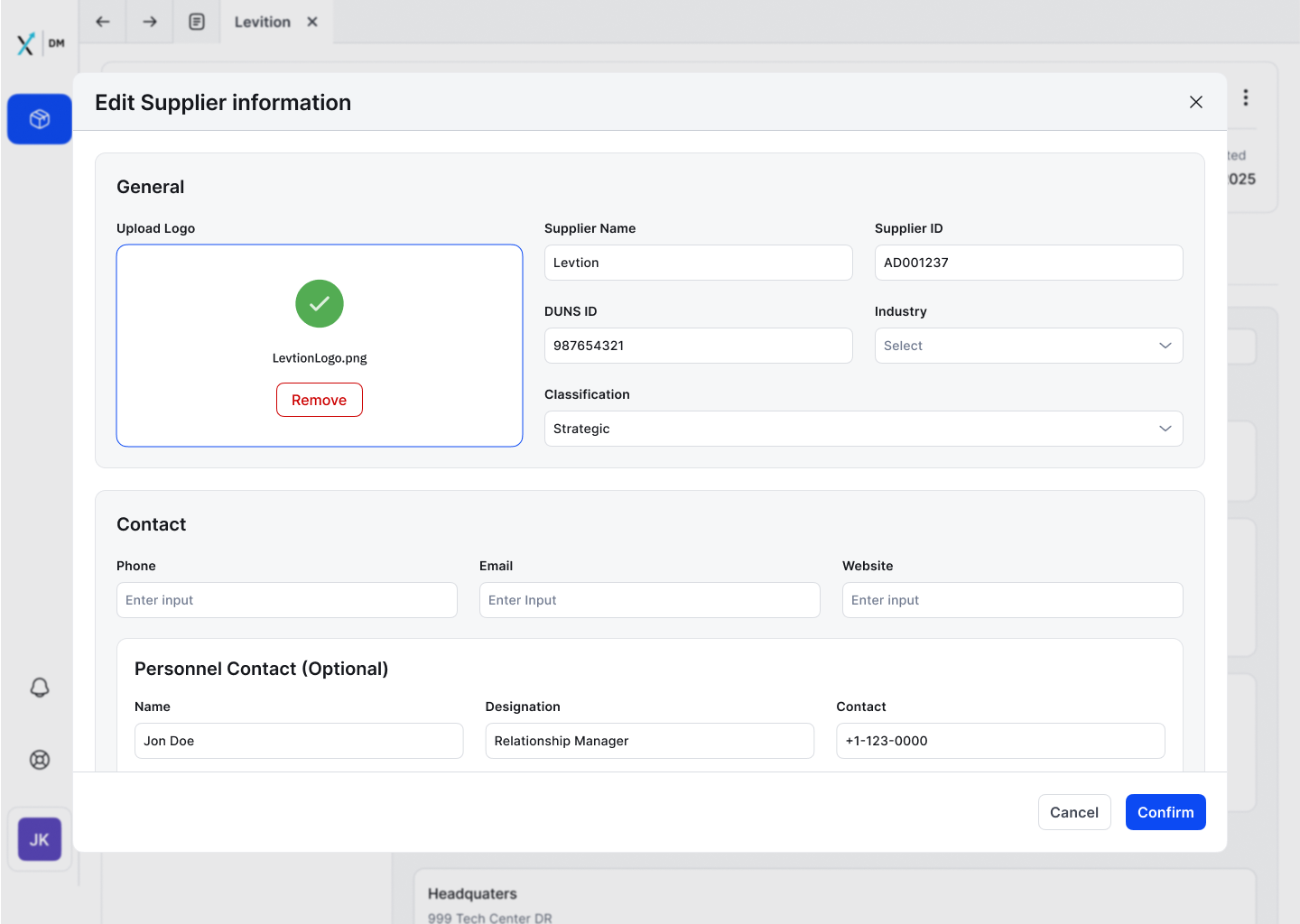
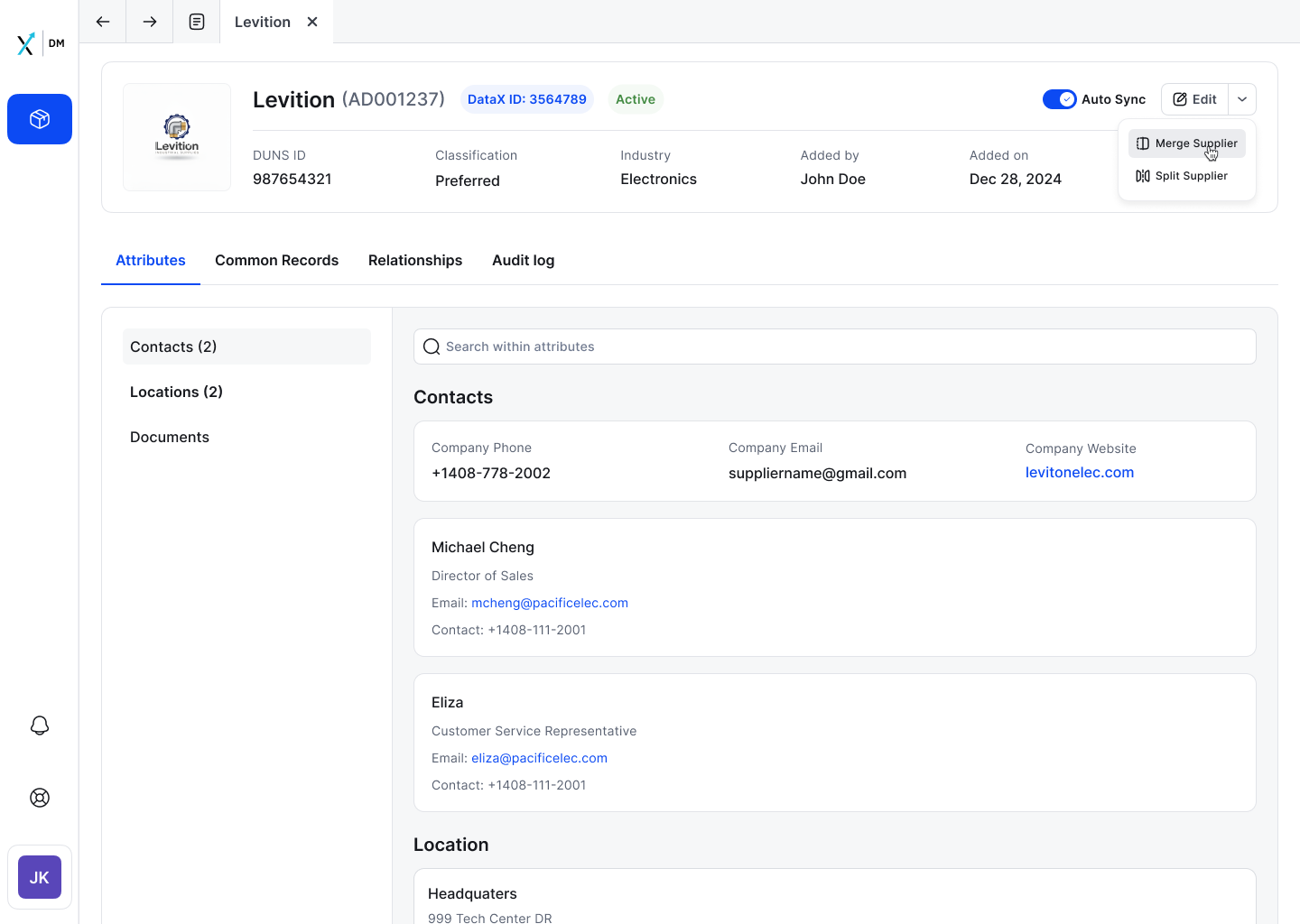
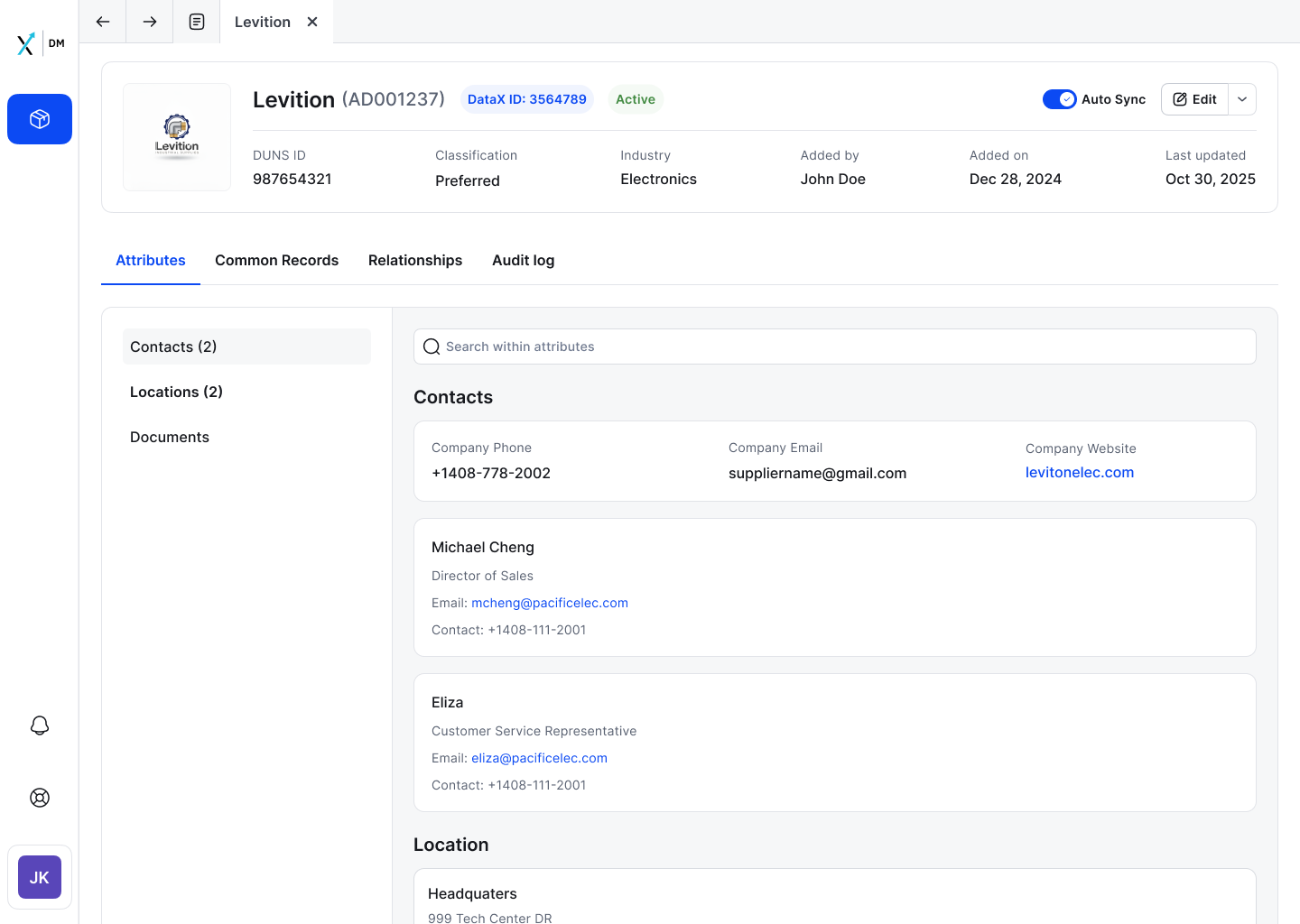
Before a user can merge or split a supplier, they need to understand it fully. Tab architecture separates concerns, each tab has one job. The header strip surfaces status and Auto Sync state before any scrolling. Inline editing keeps users in context, no modal, no lost place.
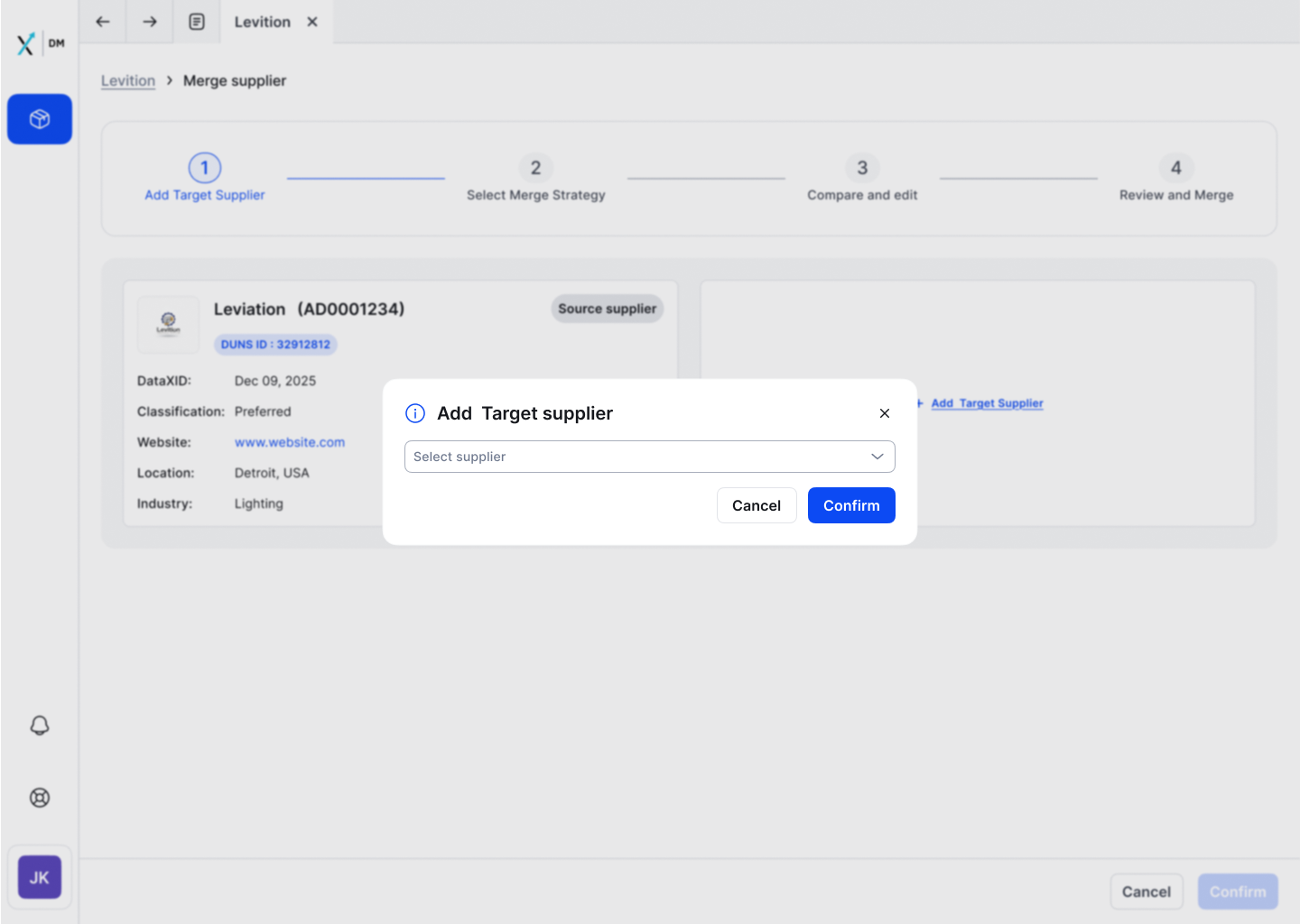
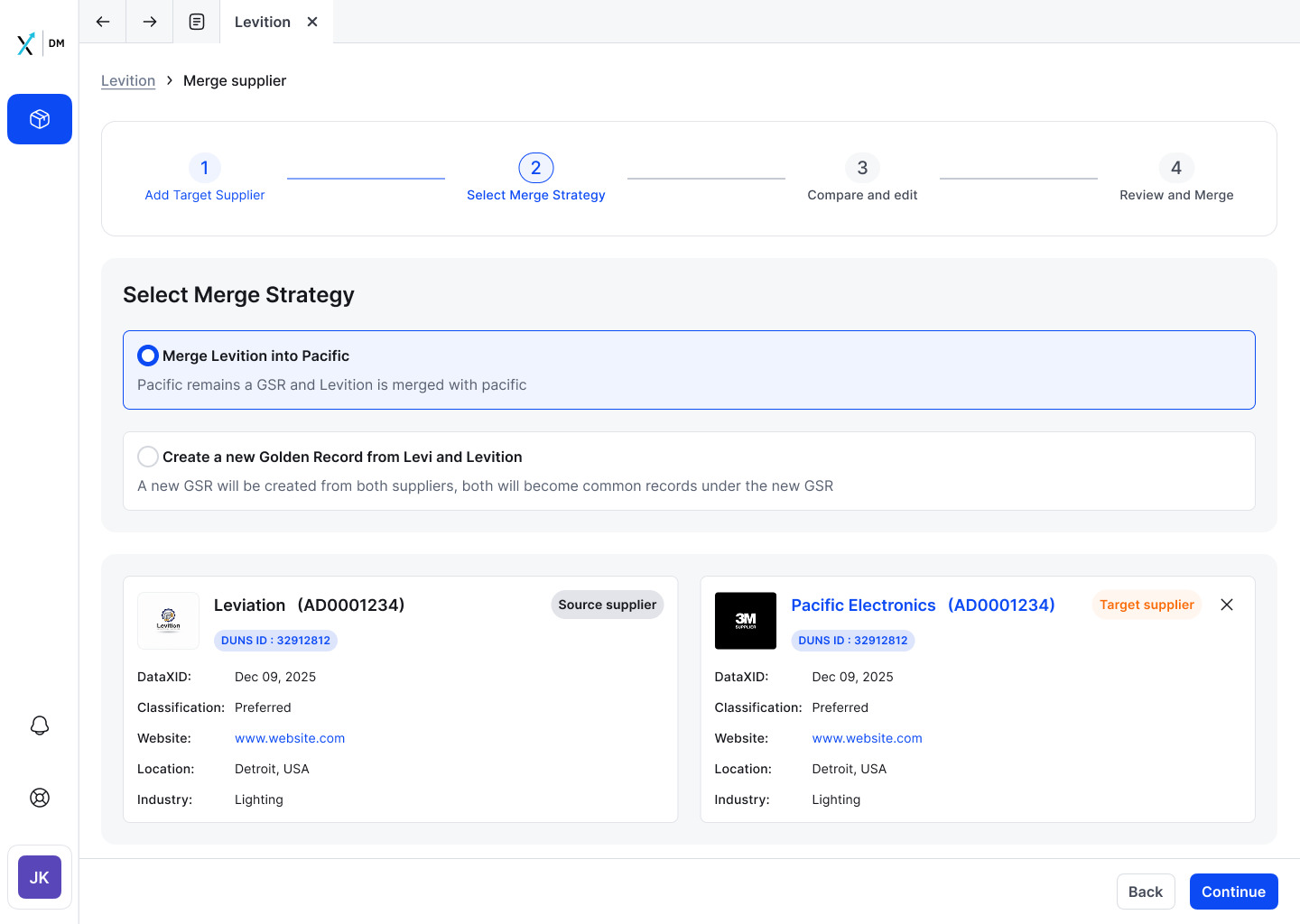
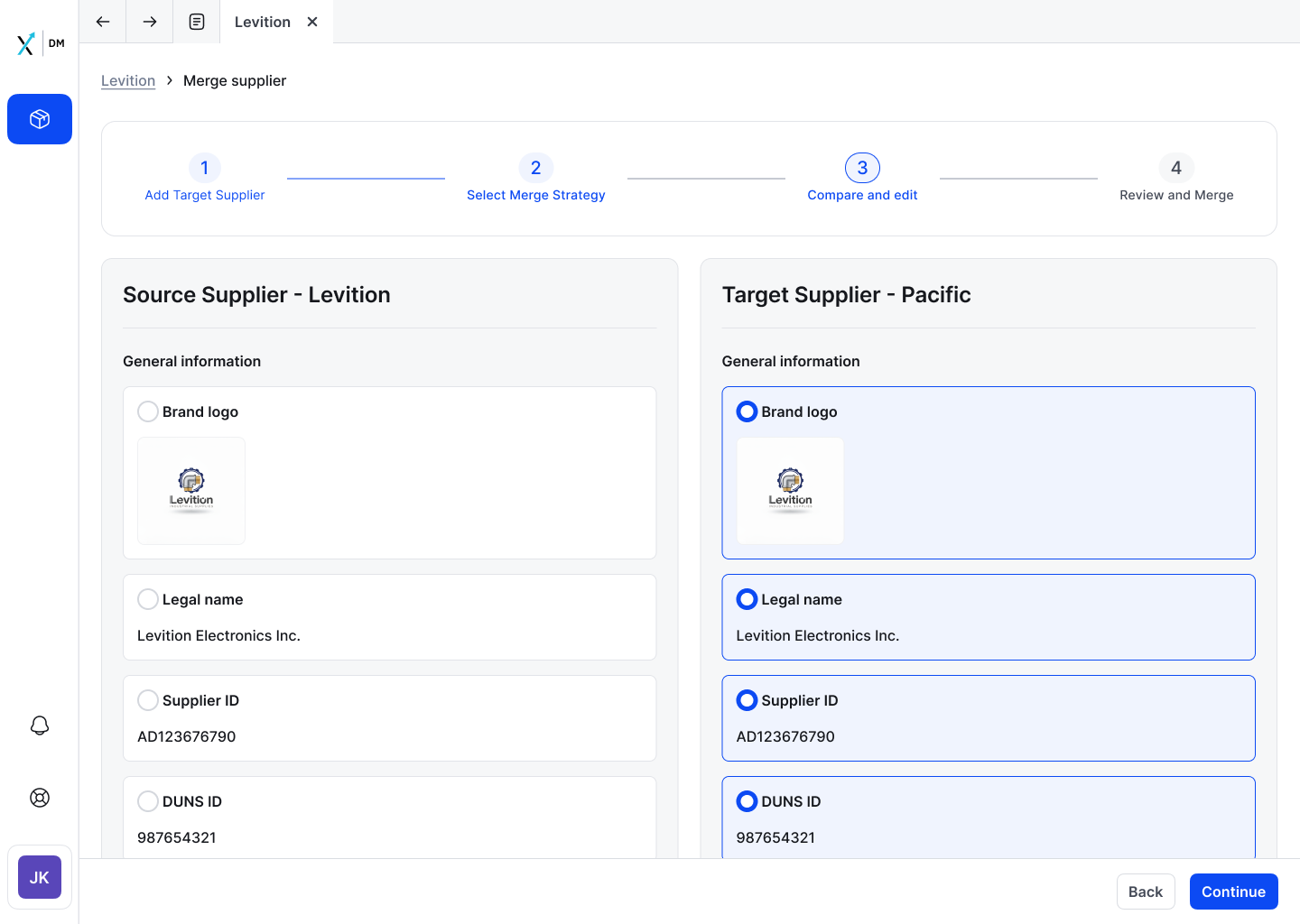
Merging two supplier records is one of the most consequential actions in the platform. I designed a four-step guided flow that makes every decision visible and every action deliberate. The merge triggers directly from the supplier page, no separate flow, no context switch. The action lives where the data lives.
Key identifiers visible on both cards. No blind merges.
Early designs used a dropdown. Users chose without understanding what they were committing to. Cards replaced it, the outcome is visible before any commitment is made.
Source left, target right. Every field independently assignable. Custom value option means users aren't forced to pick either.
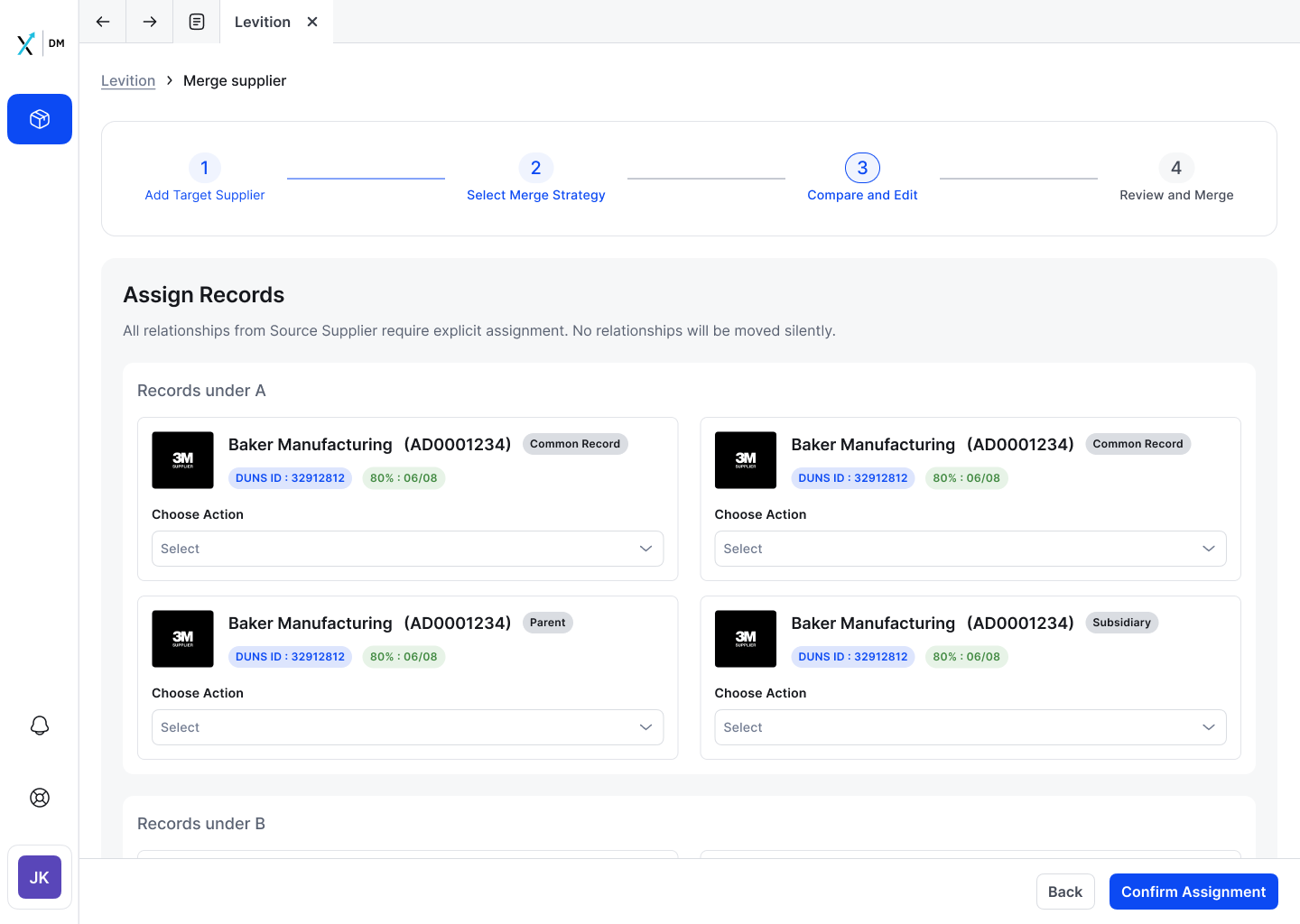
This was the most debated part of the project. When two suppliers merge, what happens to their subsidiaries, affiliates, and parent companies? Auto-assigning relationships felt too risky, one silent move could corrupt an entire supplier hierarchy.
A mandatory confirmation checkbox requires users to acknowledge they've reviewed every assignment. This isn't friction, it's a contract. The user is saying: I have reviewed every decision. I own this.
One misclick here corrupts an entire hierarchy. That's why nothing is assumed.
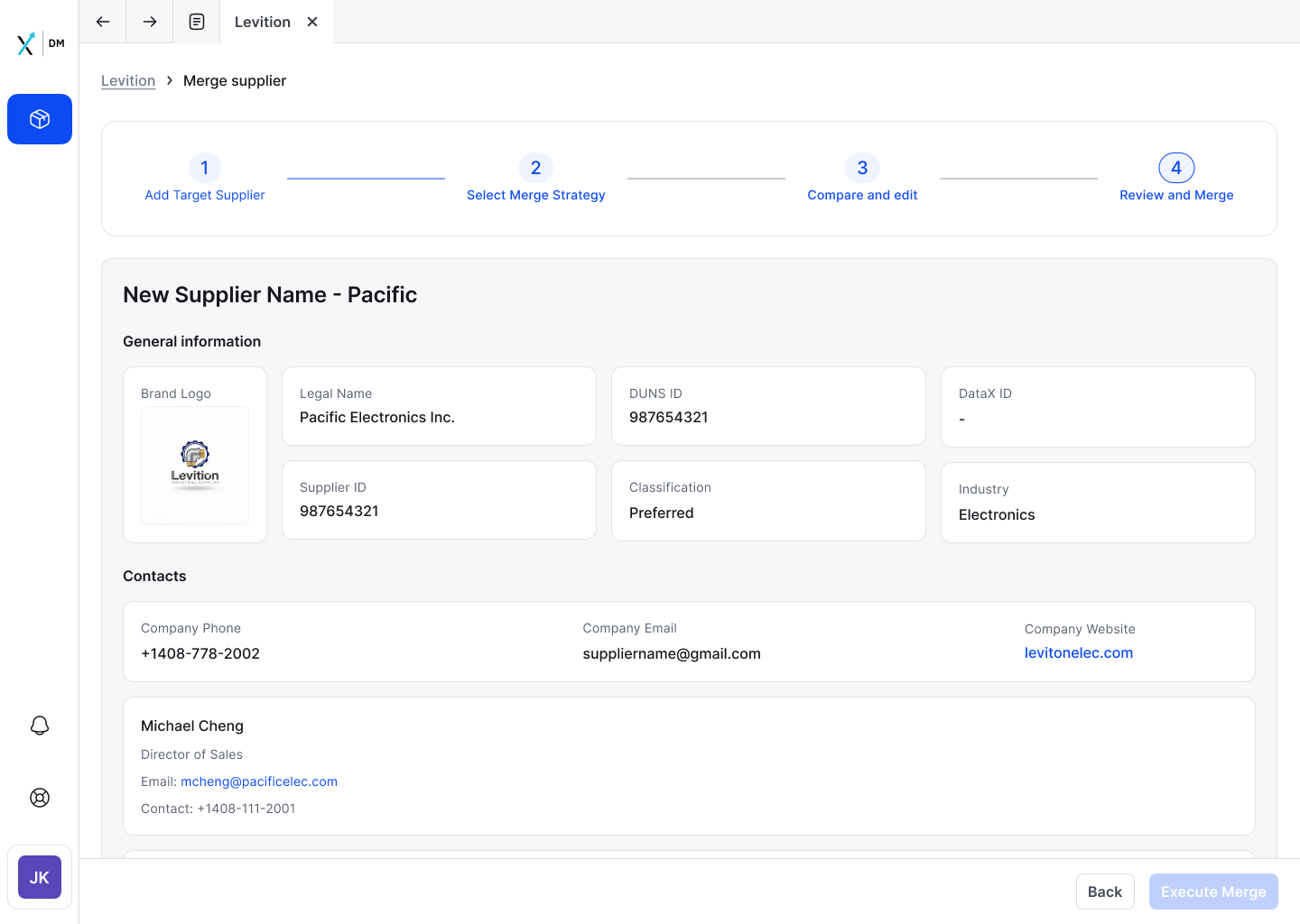
A complete summary of the merged supplier, all attributes, contacts, locations, and a relationship assignment table showing exactly where every record ended up. Users can navigate back and correct anything before executing.
Before you execute, you see everything. That's not a courtesy, it's the design.
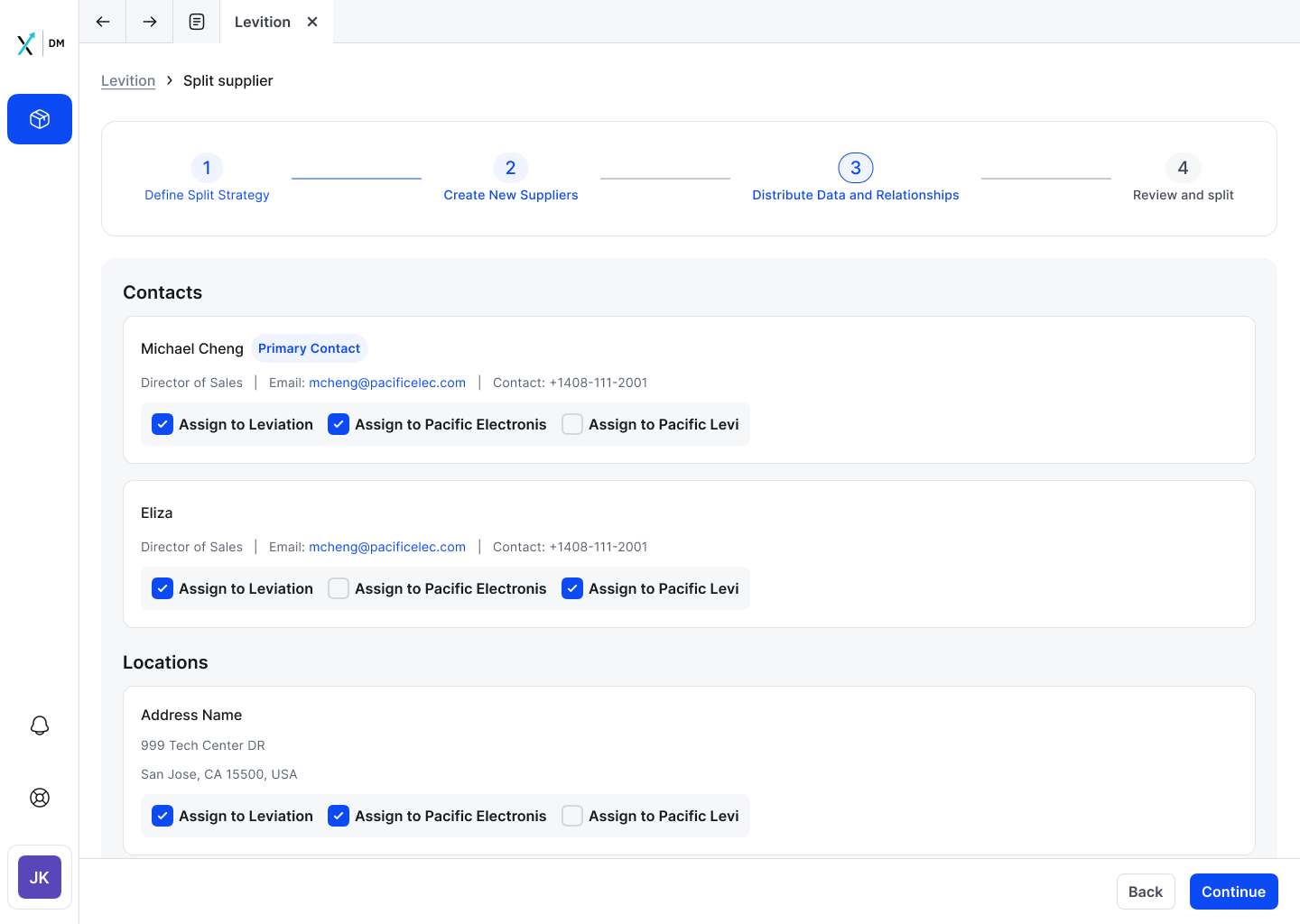
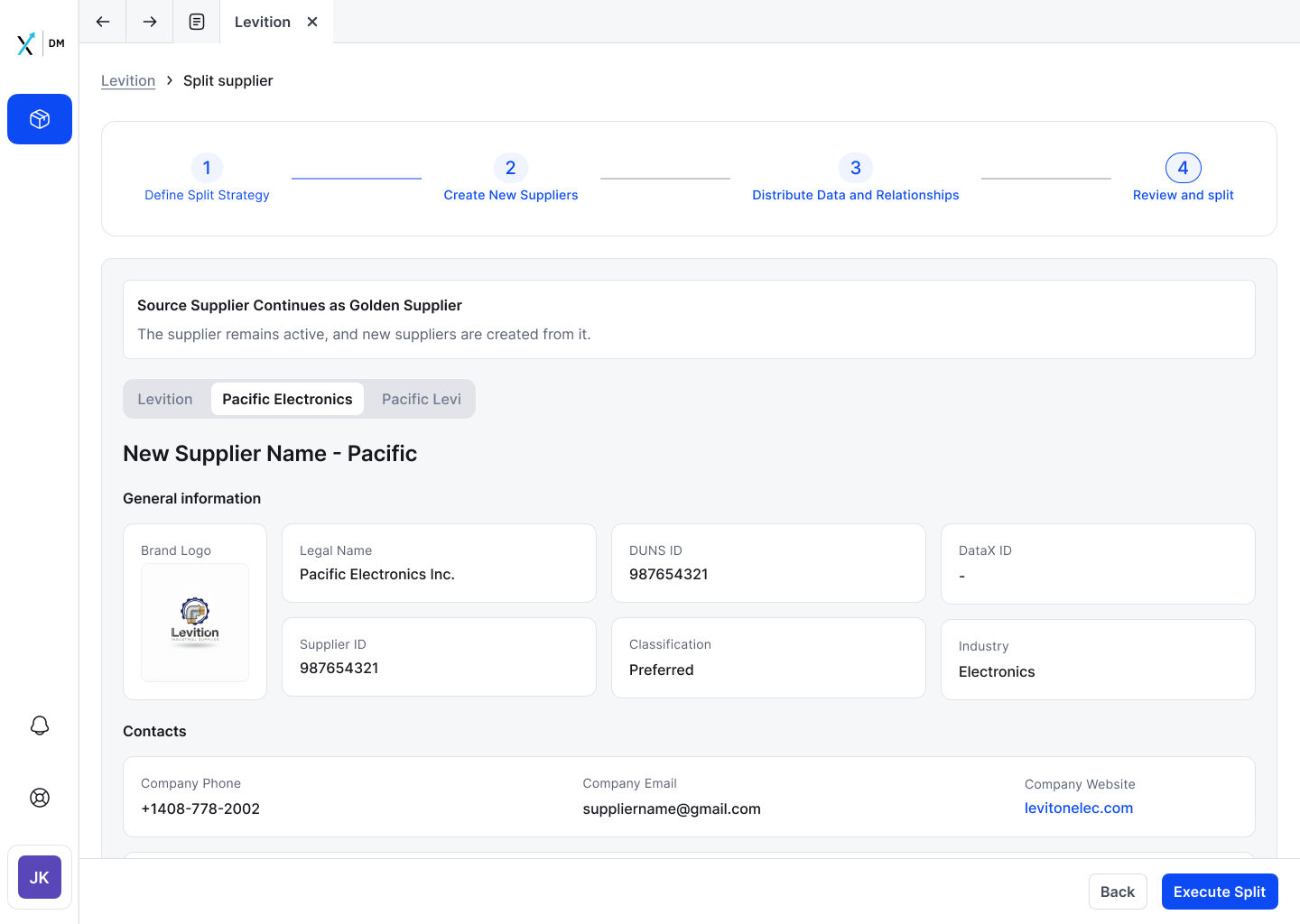
The split flow solves the inverse problem, a supplier incorrectly merged needs to be separated. Same entry point, same mental model, no relearning. Every contact, location, and document must be explicitly assigned to one of the new suppliers. One action per item. Nothing assumed. Same confirmation checkbox. Same audit trail.
Same rigour as merge. Because the stakes are identical.
* Projected. Phase 1, metrics updated post-launch.
Designs based on stakeholder inputs and competitive analysis, not yet validated with actual data stewards.
Power users managing hundreds of records may need faster ways to assign in bulk. Phase 2 problem.
The platform is desktop-only for now. Mobile use cases remain unexplored.
Phase 1 ships. Phase 2 learns. That's how good products are built.
Designing for trust is different from designing for usability.
Usability asks: can the user do this?
Trust asks: does the user feel safe doing this?
The relationship assignment screen isn't the most beautiful thing I've designed. It might be the most important. Not because it looks good, because it makes the whole system trustworthy.
That's the kind of designer I'm trying to be.